 ben's notes
Depression and Bipolar
Depression #
Depression as a symptom:
- depressed mood (sad, empty, hopeless), irritable
- loss of interest/pleasure (anhedonia)
Depression as a disorder (major depressive disorder): 5 or more of the below symptoms in a 2 week period
- weight loss/gain
- sleep problems
- psychomotor agitation/retardation
- fatigue
- feeling worthless or excessive guilt (such that it affects others negatively)
- decreased concentration
- thoughts of death and suicide
Only 50% of adolescents with depression are diagnosed before adulthood.
- adults expect teens to be moody
- depression might express more as irritability rather than sadness in youth
- cultural norms around depression: may be taboo in cultures
Etiology #
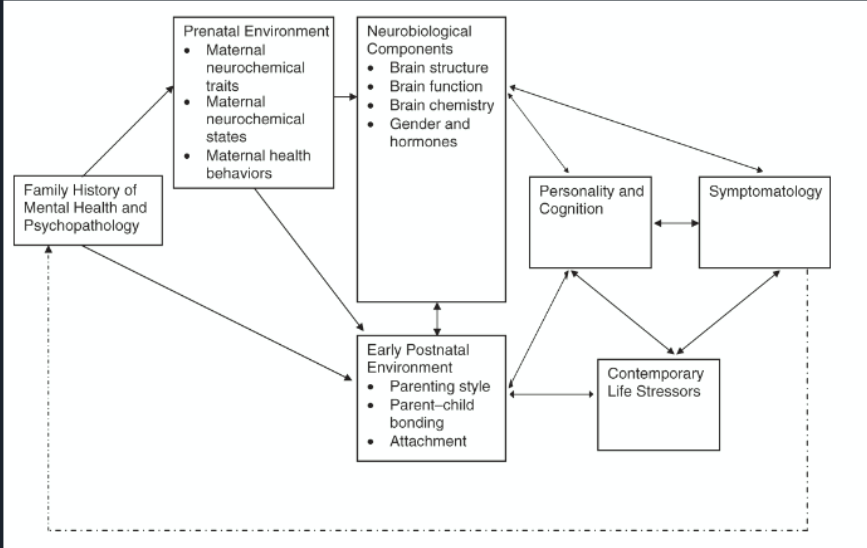
- Depression is heritable and runs in the family (genetic risk factor)
- Family history increases risk of maternal depression, which influences the child’s prenatal environment. (risk factor)
- This impacts infants’ brain structure and function. (endophenotype)
- Postnatal environment is influenced both by infants’ behavior, and parental depression affecting parenting style. (risk factor)
- Gene-environment interaction can create personality patterns that make children more vulnerable. (mediator)
- Stressful life events are more likely to trigger depressive symptoms due to prior risk (moderator)
Biological systems #
- Reward system (dopamine) and reward mediation model
- stress -> reward dysfunction -> depression
- example: soldiers deployed in stressful high conflict areas showed reduction in reward response, and higher depressive systems
- Stress system (LHPA) and stress generation model
- reward dysfunction -> stress -> depression
- example: if reward is not experienced for social interactions, youth will withdraw from relationships -> interpersonal stress contributes to depression
- Cognitive control/executive function system (prefrontal cortex) and diathesis stress model
- stressors moderate reward dysfunction -> depression
- example: a twin with more stressful life events is more likely to develop depression despite having the same genetic risk
Treatment #
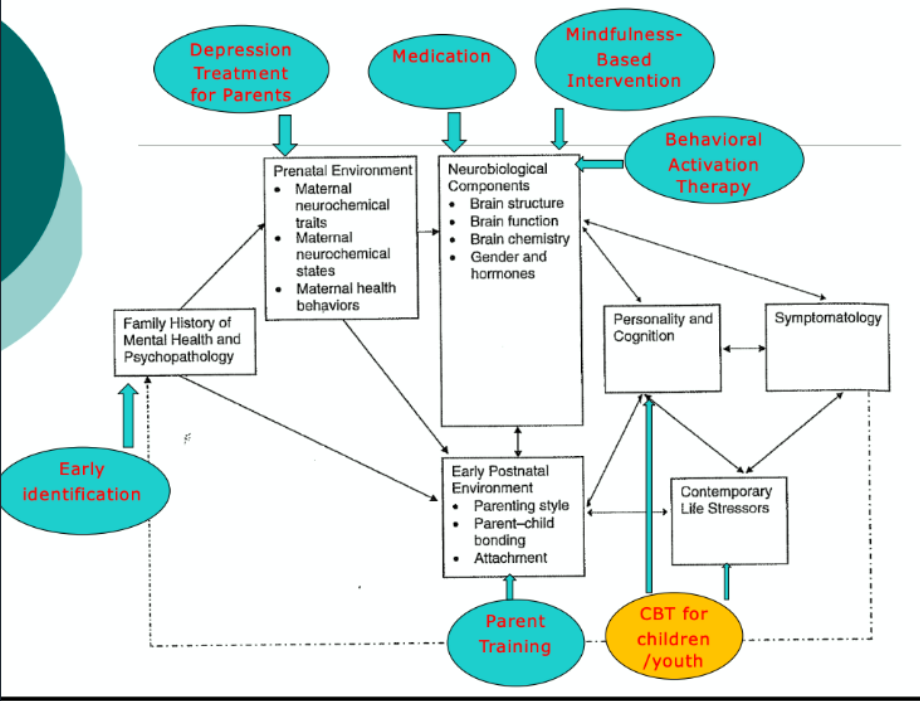
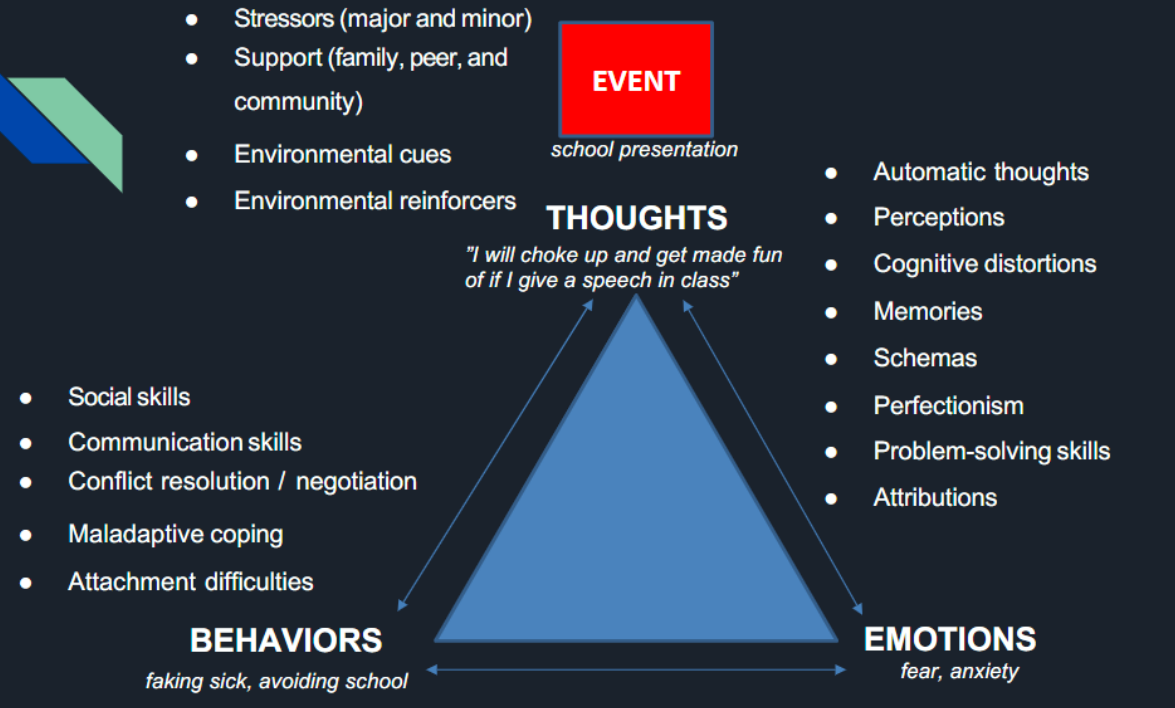
Cognitive Behavioral Therapy: Emotions (instant) lead to thoughts (delayed), which lead to behaviors (response to stressful situation).
Negative emotions often are the root cause of depressive thoughts (“I should have…”, cognitive distortions) However, targeting emotions directly is ineffective (“don’t be sad/depressed”…).
Instead, CBT focuses on putting behaviors first (e.g. writing down the first thing you will do when you wake up, and doing it even if you don’t feel like it). This will then affect emotions.
Antidepressants: using drugs to target neurotransmitters
- SSRIs: selective serotonin reuptake inhibitors (prozac, lexapro, zoloft, celexa, luvox, paxil)
- Tricyclic antidepressants (norpramin, tofranil, pamelor): only prescribed if SSRIs don’t work due to more side effects
- Monoamine (MAO) oxidase inhibitors: marplan, nardil, emsam, parnate
Research shows that a combination of CBT and antidepressants is most effective; just antidepressants alone is ineffective due to:
- not targeting thoughts/behaviors
- us not actually knowing how they really work
- genetic variability between individuals
- cuts off extreme emotions of all kinds, including positive emotions
Bipolar Disorder #
Bipolar disorder is depressive disorder with episodes of mania.
Bipolar I: mania, II: hypomania
Bipolar has extremely high heritability.
Symptoms of mania #
- elevated mood
- increased motor activity and energy
- increased sexual interest
- decreased need for sleep
- increased irritability
- increased rate of uninterruptible, continuous speech
- language-thought disorder: frequently changes topics, difficult to follow, often incoherent
- grandiose or paranoid ideas, delusions, hallucinations
- disruptive-aggressive disorder: threatening, demanding, destructive
- often denies illness
Mania vs Hypomania:
- Mania is more severe (1 week vs 4 days, with higher functional impairment)
- Individuals experiencing mania are often dysfunctional and need to be hospitalized