 ben's notes
Substance Use Disorder
Symptoms #
Impaired control:
- Using more of a substance than intended, or for longer than intended
- Trying to cut down but are unable to
Physical dependence:
- Cravings or urges to use substance
- Need more to get desired effect (builds up tolerance)
- Withdrawal symptoms when not using substance
Social problems:
- Spends significant time obtaining and using substances, and recovering
- Neglects responsibilities due to substance use
- Continuing to use substances when they cause relationship issues
- Gives up important social/recreational activities
Risk use:
- Uses substances in risky situations that put individual in danger (e.g. driving)
- Uses substances when they cause issues in physical and mental health
Heavy drinking criteria #
female or >65 years old: 7 drinks per week or >3 per occasion male: 14 drinks per week or >4 per occasion
3 Key Pathways: Etiological Models #
Etiological model = causal pathway
- Example of equifinality due to multiple different pathways all leading to the same result (substance use problems)
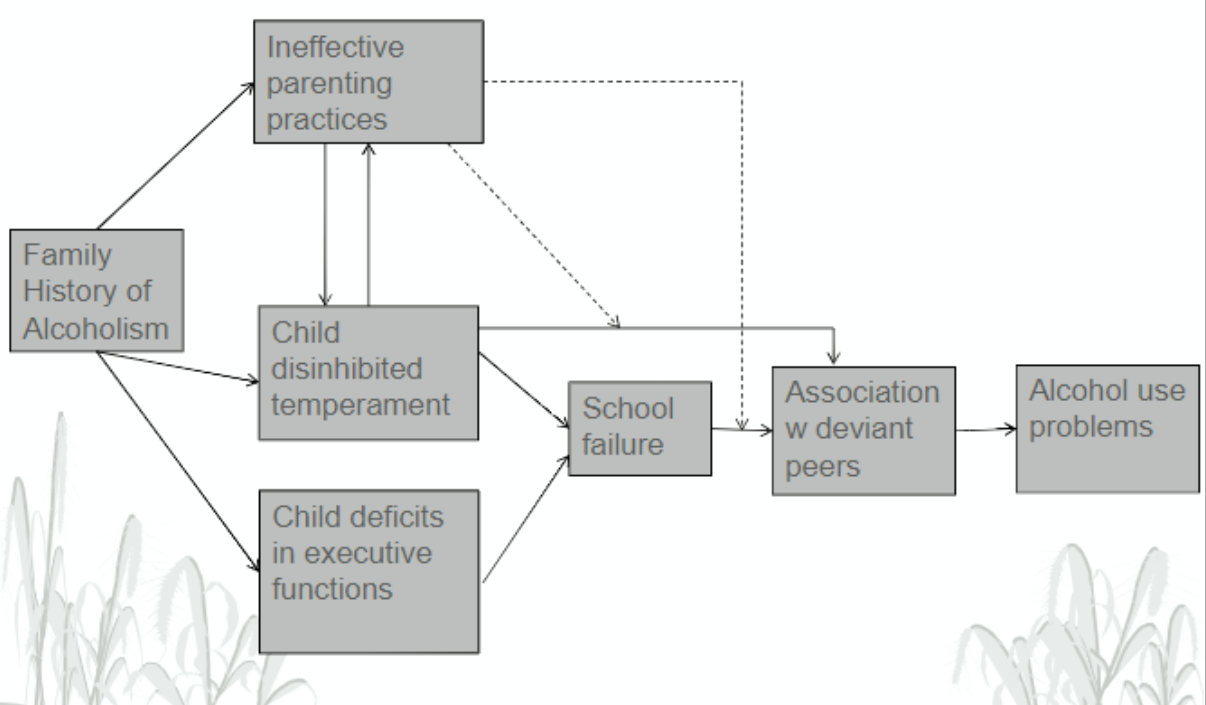
Deviance Proneness Pathways:
- Disinhibited temperament as a result of family problems
- ineffective parenting leads to child being behaviorally uncontrolled
- Child is exposed to ‘deviant peers’ who introduce them to substances
- Learn norms promoting substance use (peer pressure)
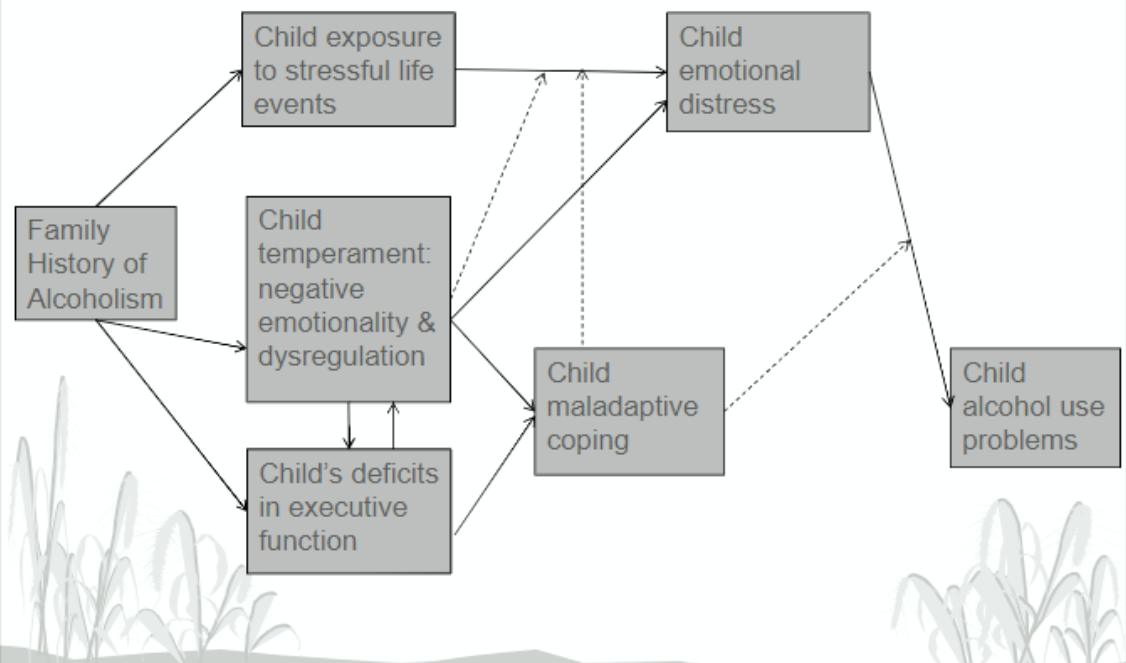
Stress and Negative Affect, Internalizing Pathways:
- Main idea: substances are used to cope with stressful situations
- Often seen in families with substance use problems: family dynamic is a constant source of chronic stress that creates deficits in executive functions
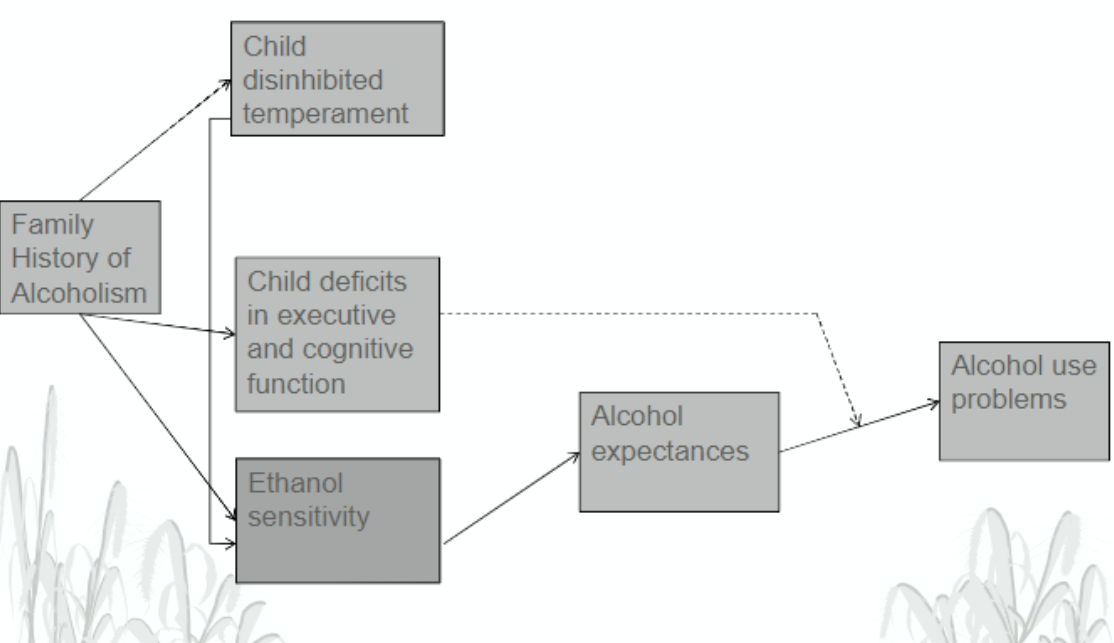
Alcohol Effects Pathways
- Main idea: children of parents with a history of alcoholism have increased sensitivity to alcohol that makes it more appealing to use
Why are teens more sensitive? #
- Increased reward sensitivity